
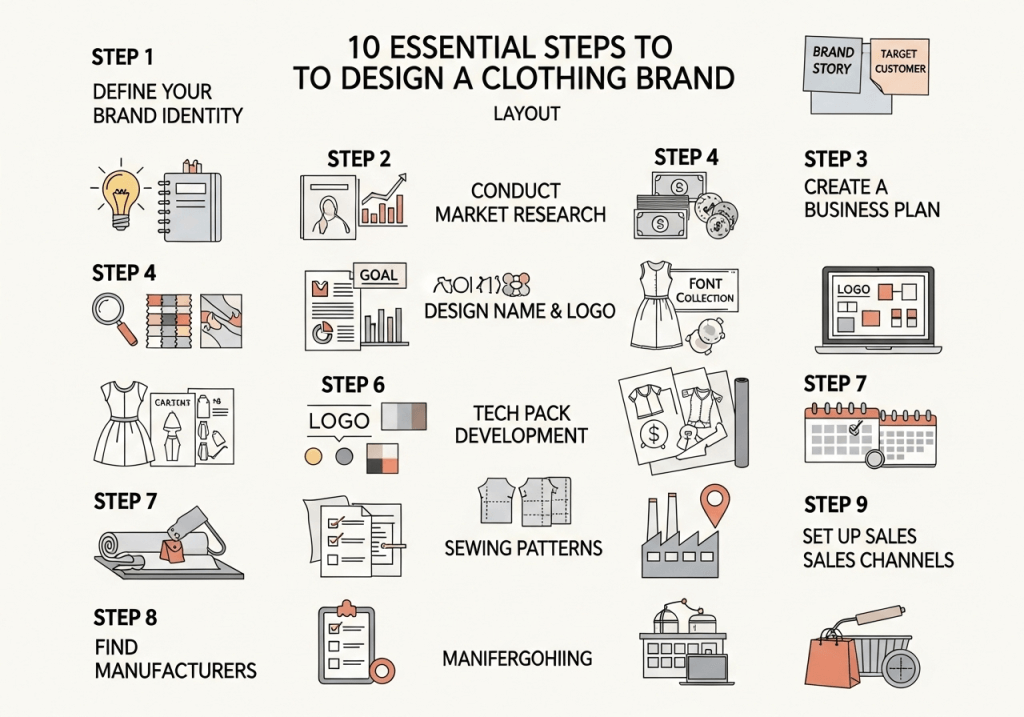
Do you know how to design a clothing brand? It’s all about defining your brand identity, choosing your brand’s personality, finding a custom fashion designer and manufacturer, and planning your sales channels.
I’ve put together a guide with the 10 essential steps you need to design your first clothing brand. Let’s jump into the article!
Step 1: Define Your Brand Identity
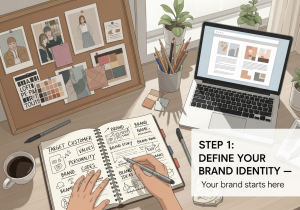
Do you know what brand identity is? It’s the identity that will represent your business with just a single name. And this is such an important step that you should work on it right at the beginning—even before you’ve sketched a single piece of clothing!
Of course, you’ll select your favorite clothing styles, find a custom fashion designer, and follow many other steps—but not before you note down your brand identity.
So, grab a notebook and start writing down the following to define your brand identity:
- Who is your target customer? (Consider their age, lifestyle, psychology, etc.)
- What will your brand values be?
- How will you make your brand stand out from the competition?
- Select your brand personality.
- Work on the visual identity that you want for your brand.
- Write the story behind your brand.
- You can also start thinking about your product style codes!
- Choose a simple and unique brand name.
- What will your brand positioning look like?
- And above all, make notes about user experience and brand consistency.
Now, your brand identity is ready to go!
Step 2: Conduct Market Research
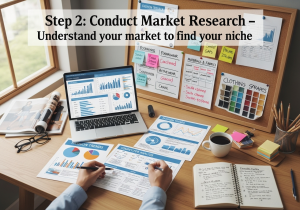
Now, in the second step, your job is to do market research.
First, write about the current fashion trends. Then, make a list of suitable materials and fabrics. Next, create a list of competitors—both direct and indirect—including their products, prices, marketing styles, strengths, and weaknesses.
After that, decide on the clothing category. Will formal wear work better, or activewear? Where’s the market gap in that category? Once you select a category, research the price range associated with it. Figure out your sales channels. Also, gain knowledge about textile laws and understand the market size.
By doing all this, you’ll be able to complete your clothing brand’s market research quite successfully.
Step 3: Create a Business Plan
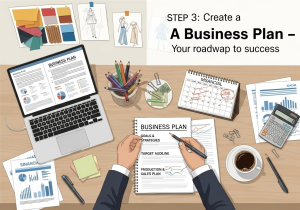
Now, create your business plan. Your business plan should have the following:
- Your goals, strategies, and target audience.
- Budget and timeline.
- Visualize what’s coming next.
- How you will handle production, sales, distribution, and marketing.
Decide where you will design your clothing and calculate the initial investment you need. Include all these points to make your business plan proactive.
Step 4: Create Your Brand Name and Logo
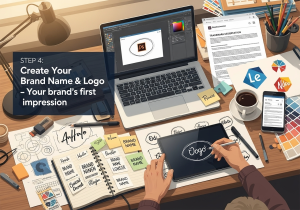
Your customers will see your brand logo as the first impression of you.
Select a brand name that’s easy to pronounce. You should trademark the name and have a domain name so you can quickly set up your business website. Hire a graphic designer to help you create your business logo.
Step 5: Design Your Collection
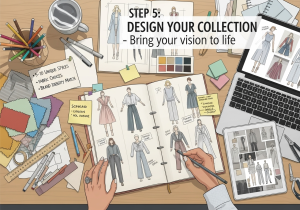
Now we’ve reached the most creative part—I think this is going to be the most exciting part for you: designing your very first clothing collection!
Grab a piece of paper and start jotting things down:
- How many unique styles will you have in your first collection?
- How will you design these styles?
- Select fabrics, colors, and other details to match your brand identity.
Start with 5-10 unique styles so you can move forward without any stress. Choose your unique clothing style categories. Decide whether you handle everything yourself or hire a freelance fashion designer. Try to connect with an experienced designer so your design details turn out perfect.
Step 6: Develop a Tech Pack
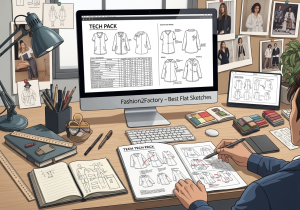
A tech pack is the most essential document for your style design—it serves as a detailed guide for your manufacturer.
For this detailed work, it’s best to hire an expert tech pack designer.
Reach out to the designer with your references and all the requirements you want for your style. They’ll give you a specific deadline and complete all your tech packs.
Visit our website to get best flat sketches for your brand!
Step 7: Create Sewing Patterns
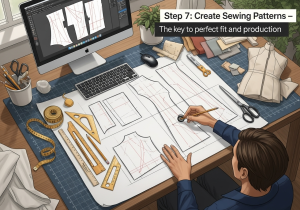
A sewing pattern is what helps your manufacturer or seamstress cut your styles to accurate measurements.
Decide whether you have expert knowledge of sewing patterns or if you’ll need to hire a professional pattern maker.
To avoid costly mistakes and fitting issues, your patterns must be precise. Select your style’s size range, e.g., XS to XL, and move smoothly into commercial production.
Step 8: Find Reliable Manufacturers
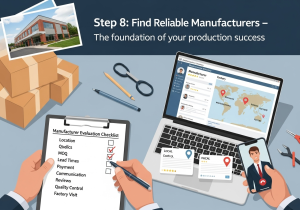
Choosing a good manufacturer or factory is a make-or-break (!) point for bringing your clothing brand journey to life. Now, decide whether to go with a local manufacturer or explore international options based on your budget.
I have prepared a checklist for you:
Manufacturer Evaluation Checklist
Factor |
What to Look For |
| Location | Local factories mean faster work and easier visits; overseas ones usually cost less. |
| Quality Standards | Check certifications, sample quality, and steady production. |
| Ethical Practices | The work atmosphere and eco-friendly environment. |
| Minimum Order Quantity | Do they handle the quantity you want to produce? |
| Lead Times | Timeline of production and delivery. |
| Payment Terms | The deposit rules, payment plans, and currency. |
| Communication | Response time and updates. |
| References & Reviews | Search for reviews from other brands. |
| Quality Control | If they source materials and finish products properly. |
| Factory Visit/Agent | Visit the factory or hire someone to inspect it for you. |
One of the best ways to source manufacturers is through online directories. If it’s a local factory, visit in person. If the factory is overseas and you can’t travel, consider hiring someone to inspect the factory on your behalf.
Step 9: Set Up Sales Channels
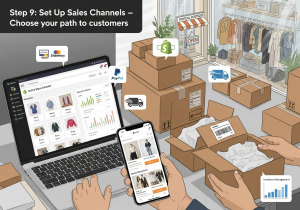
You have your tech pack, sewing patterns, and manufacturers. Do you want to sell online, in a physical store, or go for a combination? Follow an option that fits your budget.
Online Store
Start selling through an online store as it is the most cost-effective for you. Shopify, BigCommerce, or WooCommerce is beginner-friendly.
Online Marketplace
Later, sell on Etsy or Amazon if you prefer a marketplace.
Plan your payment gateway, shipping options, and inventory management to reach the highest user experience.
Step 10: Market and Launch
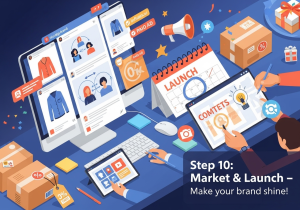
You have already made brave progress. Now, develop an effective marketing strategy.
Grow your target audience by following the steps below:
- Create engaging content
- Reach out to influencers
- Run ads
- Set up promotions
Choose a launch date and avoid unexpected delays. Collect feedback, refine your strategy, and move forward.
Conclusion
In conclusion, make sure to note every point I mentioned above.
Visit our website and reach out now if you would like our assistance in creating custom tech packs and sewing patterns.
Wishing you all the best with your clothing brand!
